
Email forwarding
Your customers may send an email message to your company's email address (for example, support@mycompany.com). These messages can be automatically duplicated into the Dashly Inbox, so you can reply to these emails straight from the “Inbox” section of Dashly.
You can create different channels for forwarding emails from different addresses - read about how you can do it in this article.
Setting up forwarding is easy, just follow the steps below:
1. Copy the "Email forwarding" address from the “Settings” – “General” section of Dashly:
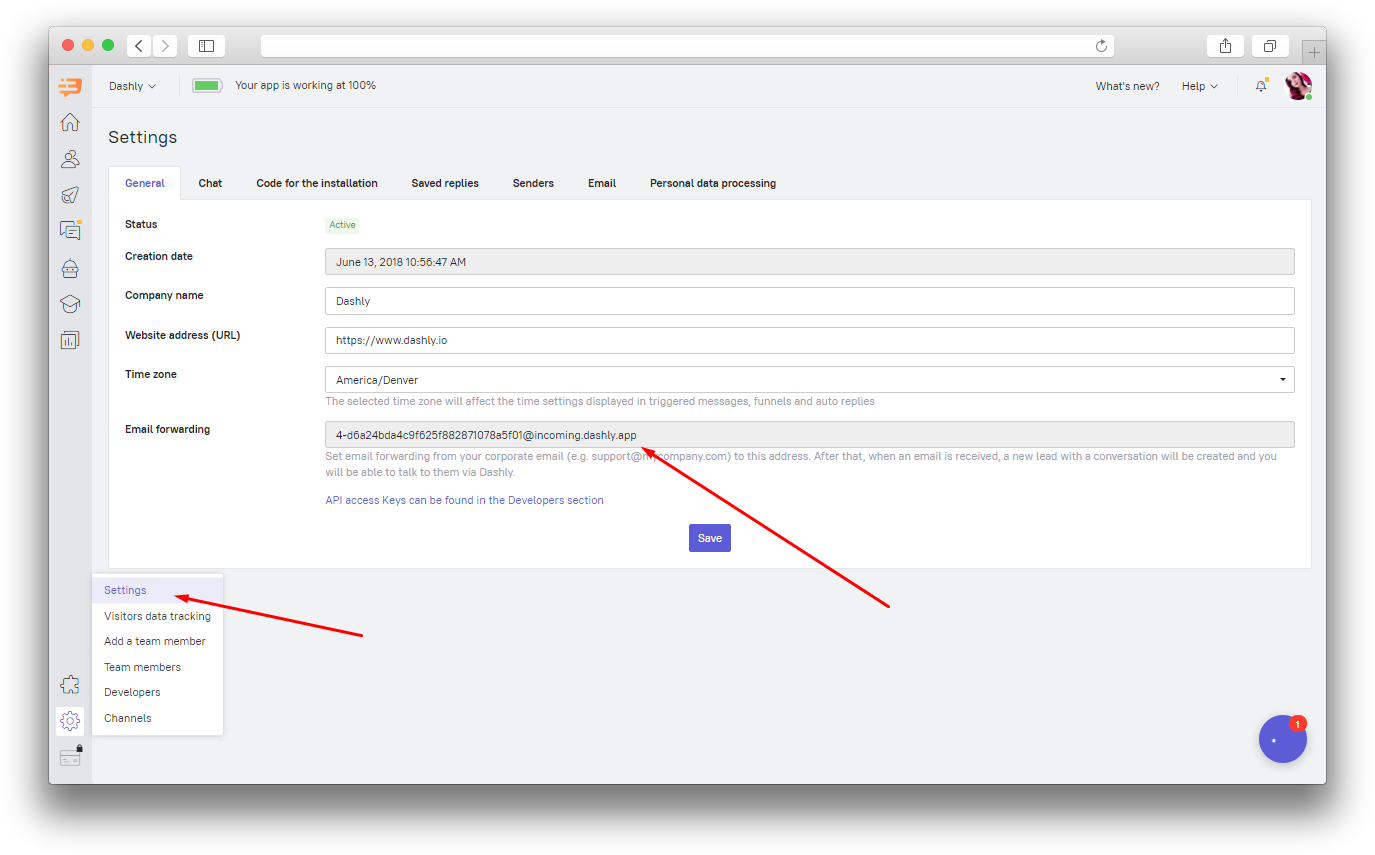
2. Copy this email address and paste it into your email provider's forwarding settings. Step-by-step guides for Gmail can be found below.
Once email forwarding is configured, the workflow works as follows:
A customer sends an email to the inbox you set up forwarding for.
The email is automatically routed to the Inbox section.
An operator replies to the message directly from the Inbox section.
The reply is delivered to the customer at the address they originally wrote from, sent from the email address assigned to that agent in your Dashly project.
Learn more about how the sender address is configured for manual messages.
Please note:
If a conversation originates from an incoming email, the operator's reply will always be sent via email. This behavior cannot be disabled. The email is sent one minute after the operator's last reply; if the operator sends multiple replies less than a minute apart, they will be combined into a single email.
Conversation rating requests will also be delivered to the user's email.
If your custom domain (e.g., @mycompany) is connected to the project alongside an email integration hosted on that same domain, emails sent from Inbox to any @mycompany address will not be delivered. This safeguard prevents infinite email notification loops among team members.
Example of email forwarding from Gmail
Go to the Gmail settings:
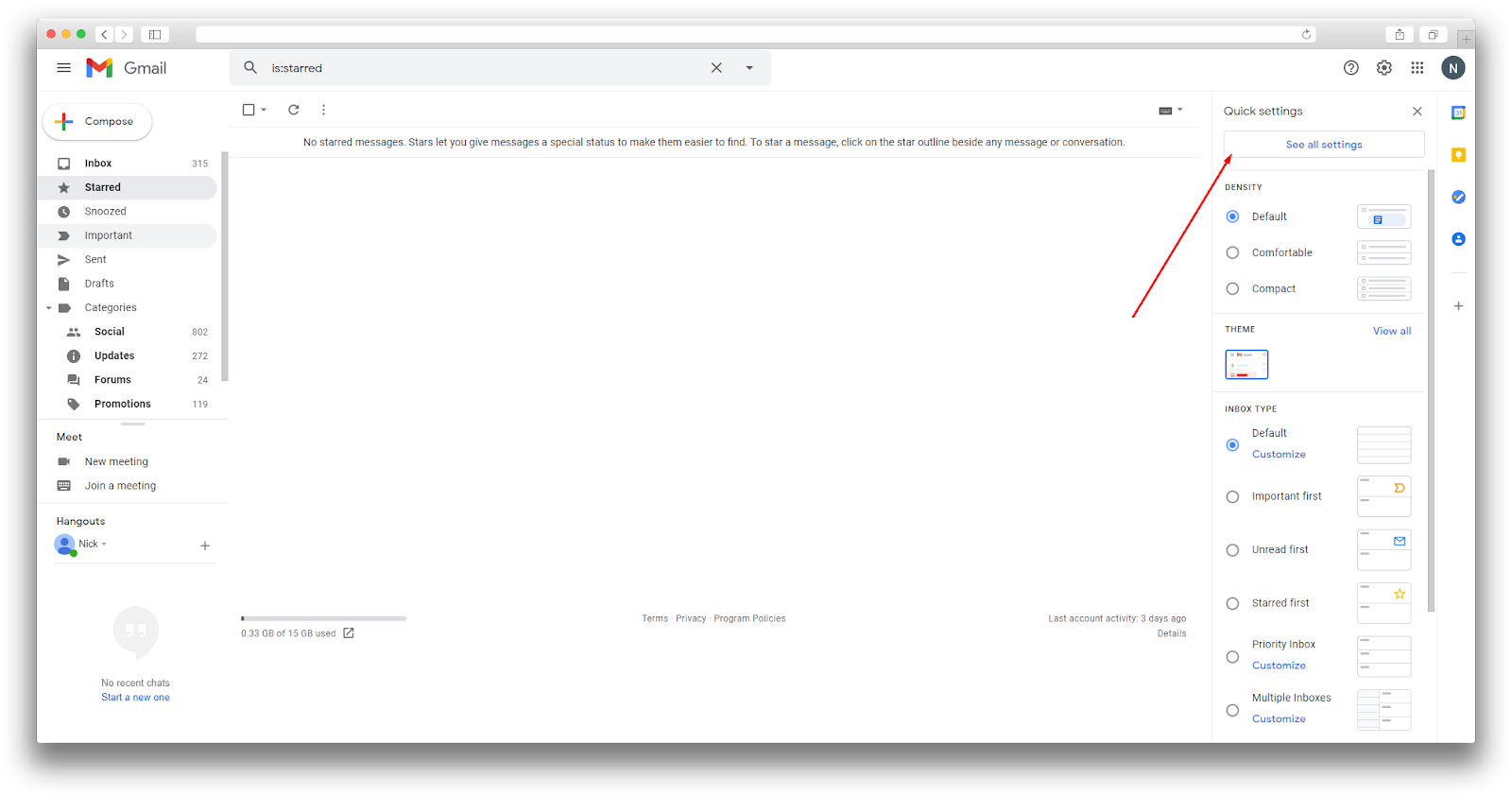
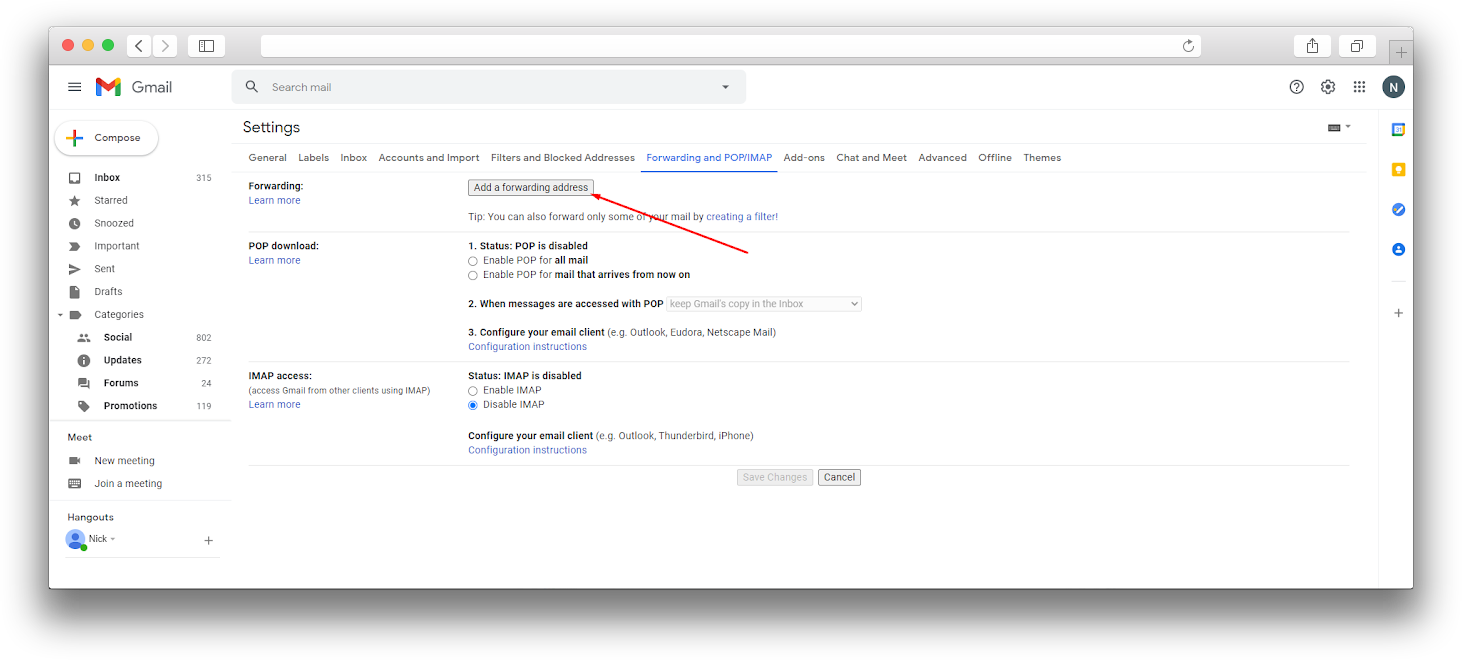
Go to the "Forwarding and POP/IMAP" section. In the "Forwarding" field, add the technical email you've copied from the Dashly settings section:
Wait for the Gmail notification in the Dashly “Inbox” section and confirm the email.
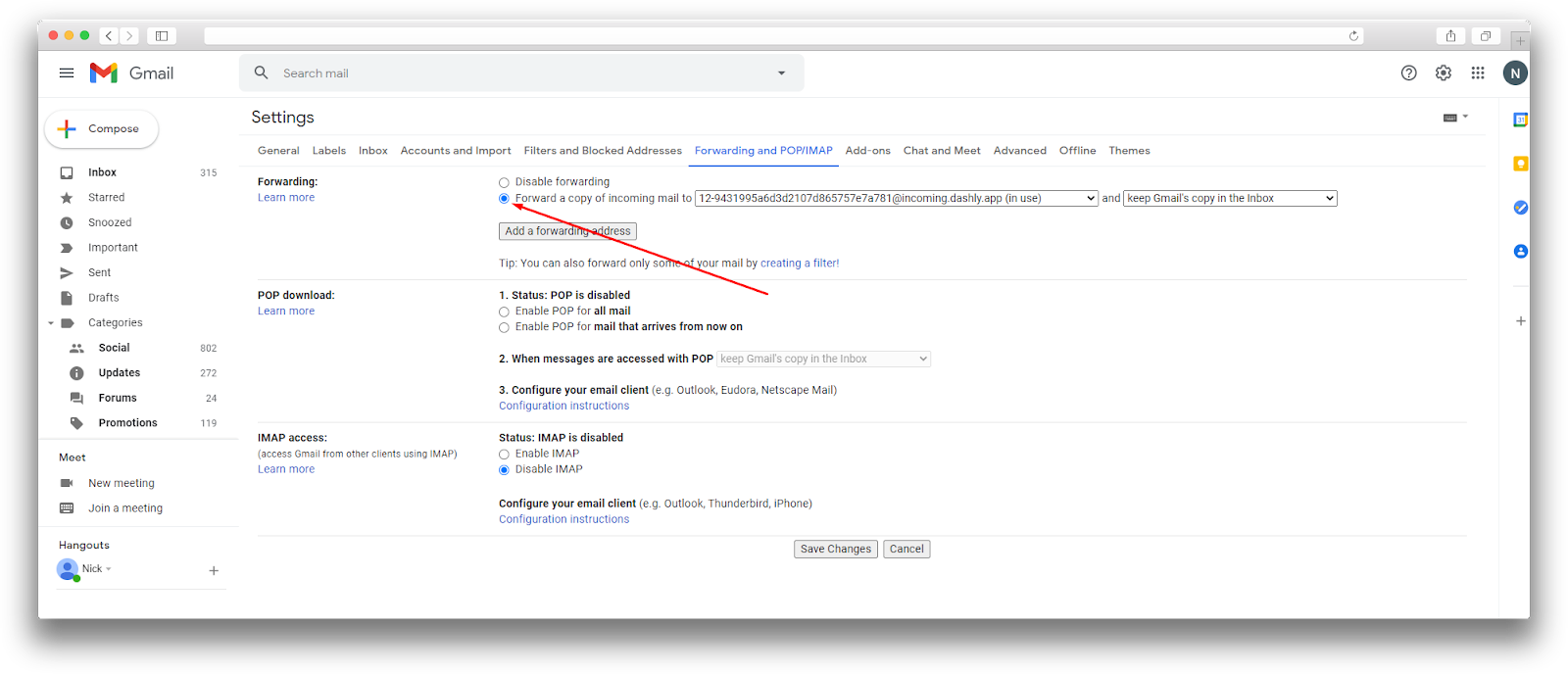
After the email confirmation, check the "Forward a copy of incoming mail to" and save changes.
Email Filtering and Forwarding in Dashly
If you don't want every single email routed to your inbox, set up filtering rules within your forwarding email provider. Likewise, if certain incoming emails are missing from Dashly, make sure they aren't being caught by rules or filters in your mailbox and are actually being delivered there first.
How Forwarded Emails Appear in Dashly
An email forwarded from your mailbox to your Dashly inbox starts a new conversation. As you continue the thread, all subsequent replies from the customer will appear within that same conversation. However, if the customer sends a brand-new email (outside the existing thread), a separate conversation will be created.
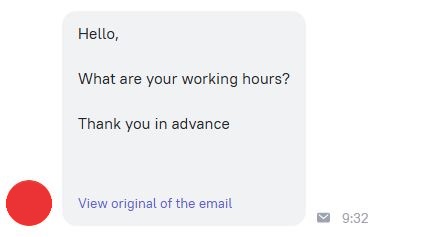
In the Inbox, forwarded emails are shown in a simplified view (without inline images or formatted hyperlinks):
Attachments: Any files attached to the email will appear as file attachments in the conversation.
Hyperlinks: Links are shown in full, enclosed in parentheses right after their anchor text.
View original email: Click the button below the message text to view the email in its original HTML format. If the customer quoted previous messages or forwarded an email chain, you will be able to review the full thread here.
How Conversations Appear in the Customer's Inbox
Customers receive your replies organized into a single email thread. The original subject line remains intact, and the message body appears as a clean, text-based thread of your conversation history.
Configuring the Default Sender for Email Replies
By default, agent replies sent to customers over email are delivered from each agent's individual technical address (e.g., alex-support@domain.com). You can customize this address under Settings → Team members.
You can define the prefix before the @ symbol yourself (e.g., help, info, support). To use your own custom domain after the @, you will need the No Branding add-on. Without this add-on, emails are sent from Dashly's default domain format (e.g., @app123.mail-dashly.io).
You can also specify a single, unified sender address for all outgoing email replies in the Senders section. Open the settings card for the preferred sender and configure the conversation settings:
Checked: All email duplicates and replies are sent from this unified address, regardless of which operator is chatting with the customer.
Unchecked: Replies are sent from the technical email address of the specific operator handling the conversation. You can view and edit this address in the team member's profile settings.